Srbija
 Hrvatska
 Slovenija

Nasa stranka leader: Hundreds of thousands want Bosnian citizenship back, but bureaucracy and SNSD stand in their way


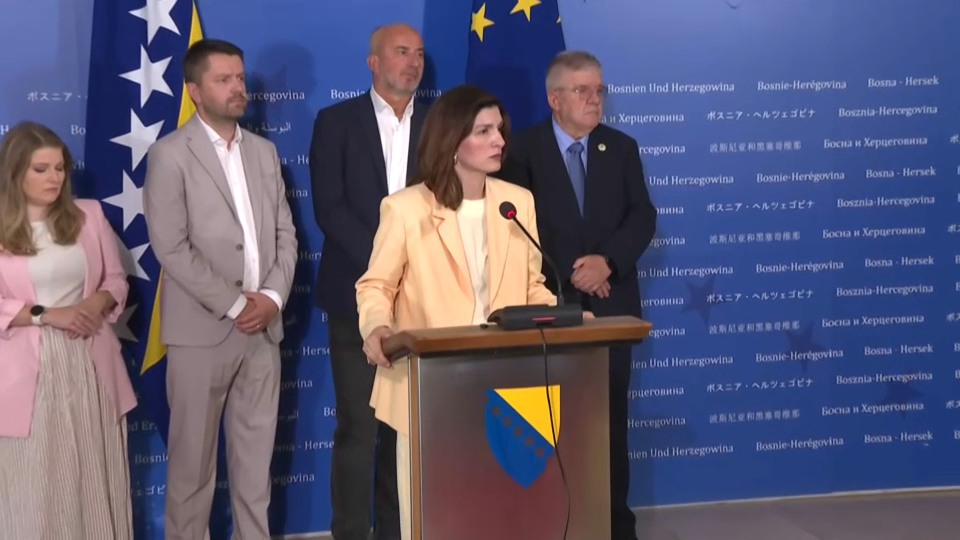
Nasa stranka president Sabina Cudic said her party will intensify efforts to encourage as many Bosnian citizens abroad as possible to register for voting in the upcoming general elections, while warning that administrative barriers and political obstruction continue to prevent many in the diaspora from reclaiming Bosnian citizenship.
Cudic reminded citizens abroad that July 21 is the deadline to register for voting from outside Bosnia and Herzegovina.


“We will certainly step up our efforts to encourage as many people as possible to register,” she said.
She also acknowledged that political parties have not done enough to mobilise the diaspora.
“I will be self-critical. Part of the problem is us politicians, because we have not adequately encouraged and inspired our fellow citizens to register on time and take part,” Cudic said.
Cudic said the issue goes beyond voting, pointing to the large number of people who lost or renounced Bosnian citizenship because countries such as Germany previously did not allow dual citizenship, while Austria still maintains restrictions.
She noted that Bosnia and Herzegovina currently has bilateral dual citizenship agreements only with Croatia, Serbia and Sweden.
“Any future coalition in which Nasa stranka may participate will depend precisely on support for bilateral agreements that would allow our citizens to regain Bosnian citizenship without giving up the citizenship of the countries where they live,” Cudic said.
According to her, those seeking to restore Bosnian citizenship include not only Bosniaks and Croats, but also tens of thousands of Serbs, particularly from Germany.
“Put simply, SNSD is preventing you from doing that,” Cudic said, referring to what she described as administrative and political obstacles blocking citizenship restoration and investment in Bosnia and Herzegovina.
She argued that easing these procedures could bring major economic benefits, especially in depopulated areas of Republika Srpska, where villages are increasingly empty and diaspora investment could help reverse decline.
Cudic also commented on the Southern Interconnection gas pipeline project, saying Nasa stranka’s support depends on the broader political context.
“Current United States policies in Bosnia and Herzegovina leave room for doubt. I will not draw final conclusions, but they certainly leave room for doubt,” she said.
She added that Nasa stranka believes the conditions for closing the Office of the High Representative have not been met and that key political issues, including the state property law, must be clarified before the project moves forward.
Cudic said the party’s position is not simply about supporting or opposing the Southern Interconnection, but about the political framework in which the project is being pursued.
“Between the interests of investors and the United States on one side, and the interests of Bosnia and Herzegovina on the other, Nasa stranka will certainly choose the interests of Bosnia and Herzegovina,” she concluded.
Kakvo je tvoje mišljenje o ovome?
Učestvuj u diskusiji ili pročitaj komentare


Kakvo je tvoje mišljenje o ovome?
Učestvuj u diskusiji ili pročitaj komentare